


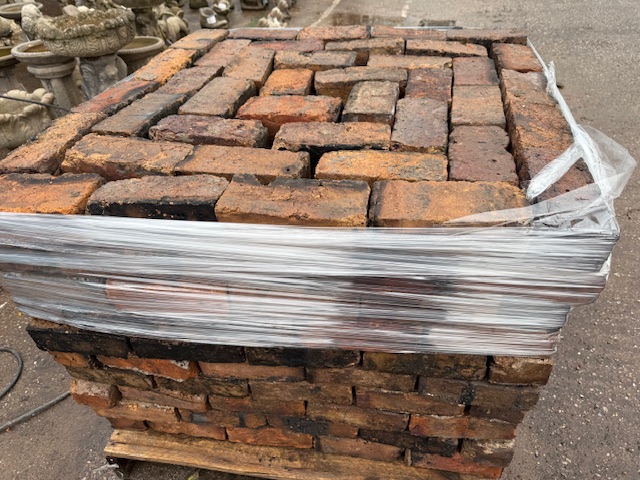
What are the common sizes and colours of reclaimed bricks?
Trying to match brickwork on an older property is a bit like trying to match paint from a tin that went out of production decades ago. Get it right and nobody notices the repair. Get it wrong and the new section shouts at you every time you pull onto the drive.
That is why size and colour are the two questions we get asked most about reclaimed bricks here at Gardiners. So let’s answer both properly, with real measurements and real colour names, so you know exactly what to look for before you order.
The Quick Answer
Most reclaimed bricks in the UK are imperial bricks, typically around 225mm to 235mm long, 100mm to 110mm wide, and between 60mm and 80mm deep. That is slightly larger than the modern metric standard of 215mm x 102.5mm x 65mm.
Colours range from classic reds and oranges through to buffs, yellows, terracottas, purples and the famous Staffordshire Blue. The exact shade depends on the clay the brick was made from and how it was fired, which is why bricks from Cheshire look different to bricks from Yorkshire.
That is the short version. The detail is where it gets useful.
Common Reclaimed Brick Sizes Explained
Imperial vs Metric: Why It Matters
Before the UK went metric in the 1970s, bricks were made to imperial measurements. Most period properties, from Victorian terraces to 1930s semis, were built with imperial bricks.
The practical difference sounds tiny on paper. A modern metric brick is 65mm deep. Many imperial bricks are 73mm, 76mm or 80mm deep. But stack 20 courses of brickwork and that difference adds up fast. Use metric bricks to repair an imperial wall and your mortar joints will either creep out of line or end up thick and clumsy to compensate.
This is the single biggest reason tradespeople and renovators choose reclaimed bricks. They are not just buying character; they are buying the correct dimensions for the building in front of them.
Typical Sizes You’ll Find in Our Yard
Reclaimed brick stock changes constantly, but these are the sizes that come through our yard most often:
- 225mm x 73mm (3 inch imperial): The classic Victorian and Edwardian brick. If you have a period terrace, there is a good chance this is what it was built with.
- 230mm x 80mm: A chunkier northern imperial size, common in older properties across Yorkshire and the North West.
- 230mm x 60mm and 235mm x 65mm: Slimmer handmade bricks, often used in older cottages and farm buildings.
- 215mm x 65mm (metric): Yes, reclaimed metric bricks exist too. Buildings from the 1970s onwards are now being demolished, so their bricks are entering the reclaim market. Handy if you are extending a more recent property and want a weathered look.
- 2 inch bricks (roughly 50mm deep): Slim handmade bricks, popular for feature work, fireplaces and Tudor-style projects.
One important note: reclaimed bricks were often handmade or fired in less consistent kilns, so expect slight variation from brick to brick, even within the same batch. A few millimetres either way is normal, and a good bricklayer takes it up in the joints. It is part of what gives reclaimed brickwork its relaxed, characterful look.
How to Measure Your Existing Bricks
If you are matching existing brickwork, do this before you order anything:
- Measure the length, width and depth of a few exposed bricks, not just one.
- Measure the mortar joints too. Older buildings often have joints of 8mm to 12mm rather than the modern 10mm standard.
- Measure a full course height (one brick plus one joint) over several courses and divide. This gives you the truest picture.
Bring those numbers with you, or have them ready when you call us on 01782 334 532, and matching becomes far easier.
Common Reclaimed Brick Colours
Why Colour Varies So Much
Brick colour comes down to two things: the clay and the kiln.
Clay with a high iron content fires red. Clay with more lime or chalk fires buff or yellow. Then the firing itself adds another layer; hotter temperatures and less oxygen in the kiln produce darker, sometimes glazed surfaces, which is exactly how Staffordshire Blues get their colour.
Because clay varies by region, brick colour became a regional signature. It is why London stock bricks are yellow, Accrington bricks are a hard bright red, and so much of Stoke-on-Trent is built in warm reds and blues from local Etruria Marl clay.
The Main Colours You’ll Come Across
- Red: The most common reclaimed brick colour in the UK by a distance. Ranges from soft rosy reds to deep rich tones. Ideal for Victorian and Edwardian properties.
- Orange and red-orange: Warm, slightly softer than a true red. Handmade orange bricks are popular for cottages and garden walls.
- Buff and yellow: Pale, sandy tones. Think London stocks and certain Midlands and Yorkshire bricks. These suit Georgian and early Victorian properties in particular.
- Terracotta: A warm earthy tone that sits between orange and red, often seen in handmade bricks.
- Blue (Staffordshire Blue): Not actually blue like the sky, but a dark steely blue-grey with a dense, almost glassy surface. Famously strong and water resistant, which is why they were used for engineering work, damp courses, copings and paths. Being based in Stoke, we are right in the heartland of these.
- Purple and dark multis: Deeper tones created by hotter firing. Often appear as darker patches on otherwise red bricks, adding depth to a wall.
- Mixed blends: Batches with natural variation across several tones. These are brilliant for larger walls because the variation reads as authentic weathered brickwork rather than a flat single colour.
Weathering: The Colour You Can’t Buy New
Here is the thing no brick manufacturer can replicate. Reclaimed bricks have spent 50, 100, sometimes 150 years outside. Sun, rain, frost and soot have softened their colour and given each face a patina.
A new “heritage style” brick is a photograph of an old brick. A reclaimed brick is the old brick. If you are working on an older home, that difference is visible from the street. We covered this in more detail in our post on reclaimed bricks vs new bricks, which is worth a read if you are still weighing up which way to go.
Matching Reclaimed Bricks to Your Project
Period Properties and Repairs
For repairs, extensions and infills on older homes, aim to match three things in this order: size first, colour second, texture third. A perfectly colour-matched brick in the wrong size will still look wrong once it is laid. Take a sample brick to a reclamation yard if you can; our team at the Stoke yard compares samples against stock all the time.
Extensions on Modern Homes
Reclaimed bricks are not just for period houses. Mixed blends and weathered reds look superb against modern glazing and render, and planners often look favourably on reclaimed materials in sensitive areas. We wrote a full guide on whether reclaimed bricks suit modern homes and extensions if that is your situation.
Garden Walls, Paths and Landscaping
For garden projects, exact matching matters less and character matters more. Staffordshire Blues make excellent copings and edgings thanks to their density and frost resistance, while mixed blend reds give garden walls that established, always-been-there look.
Whatever the project, give your bricks a quick check and clean before laying. Our guide on how to clean and prepare reclaimed bricks before use walks you through removing old mortar and checking for frost damage.
How Many Reclaimed Bricks Do You Need?
As a rule of thumb, allow around 60 bricks per square metre for a standard single-skin wall in stretcher bond, based on typical imperial sizes with 10mm joints. Always add 5 to 10 percent for cuts and the odd unusable brick; that is sensible practice with any brick, reclaimed or new.
Because reclaimed stock is finite, order the full quantity in one go where possible. Two batches of “red imperial bricks” from different demolition sites can look noticeably different side by side.
Ordering Reclaimed Bricks from Gardiners
Our reclaimed brick range lists sizes and stock levels for every batch, from handmade Cheshire reds to Staffordshire Blue specials, with prices from around £1.40 per brick. You can filter by colour, order online, and take advantage of half price local delivery across much of Staffordshire and Cheshire when ordering online.
Prefer to see the bricks in person? Sensible choice with reclaimed materials. Visit our yard at Grove Road Industrial Estate, Fenton, Stoke-on-Trent, ST4 4LG, and bring a sample brick if you are matching. We also deliver reclaimed materials nationwide, so distance is no barrier.
The Bottom Line
Most reclaimed bricks in the UK are imperial sizes, around 225mm to 235mm long and 60mm to 80mm deep, which makes them the right choice for repairing or extending pre-1970s properties. Colours span reds, oranges, buffs, yellows, terracottas, purples and Staffordshire Blues, with the shade driven by regional clay and firing. Measure your existing bricks and joints first, match size before colour, and buy your full quantity in one batch. Do that, and your new brickwork will blend in as if it has always been there.
Ready to find your match? Browse our reclaimed bricks online or call the team on 01782 334 532 for help identifying what you need.
Frequently Asked Questions
What size are old imperial bricks compared to modern bricks?
Imperial bricks are typically 225mm to 235mm long and 60mm to 80mm deep, compared with the modern metric standard of 215mm x 102.5mm x 65mm. The depth difference is the one that matters most, because it changes course heights and stops metric bricks lining up with older brickwork.
Can I mix reclaimed bricks with new bricks on the same wall?
You can, but it rarely looks right on a visible face. Size differences cause joint problems and new bricks lack weathering, so the join tends to show. If budget is tight, use reclaimed bricks on the visible faces and new bricks where they will not be seen.
What colour are Staffordshire Blue bricks and why are they so popular?
Staffordshire Blues are a dark steely blue-grey with a dense, slightly glazed surface, created by firing local clay at very high temperatures. They are extremely strong, frost resistant and low in water absorption, which makes them ideal for copings, paths, steps and damp course work as well as feature brickwork.
How do I match reclaimed bricks to my existing house?
Measure a few bricks and the mortar joints, note the colour range across the wall rather than a single brick, and take a sample brick to a reclamation yard if possible. Match the size first, then colour, then texture. A yard with wide stock, like ours in Stoke, can compare your sample against multiple batches.
Are reclaimed bricks more expensive than new bricks?
It depends on the type. Common reclaimed bricks often start from around £1.40 to £2.00 each, which is comparable to mid-range new bricks, while rarer handmade or special-shaped reclaimed bricks cost more. For period properties, the real saving is avoiding a mismatch that hurts the property’s appearance and value.


